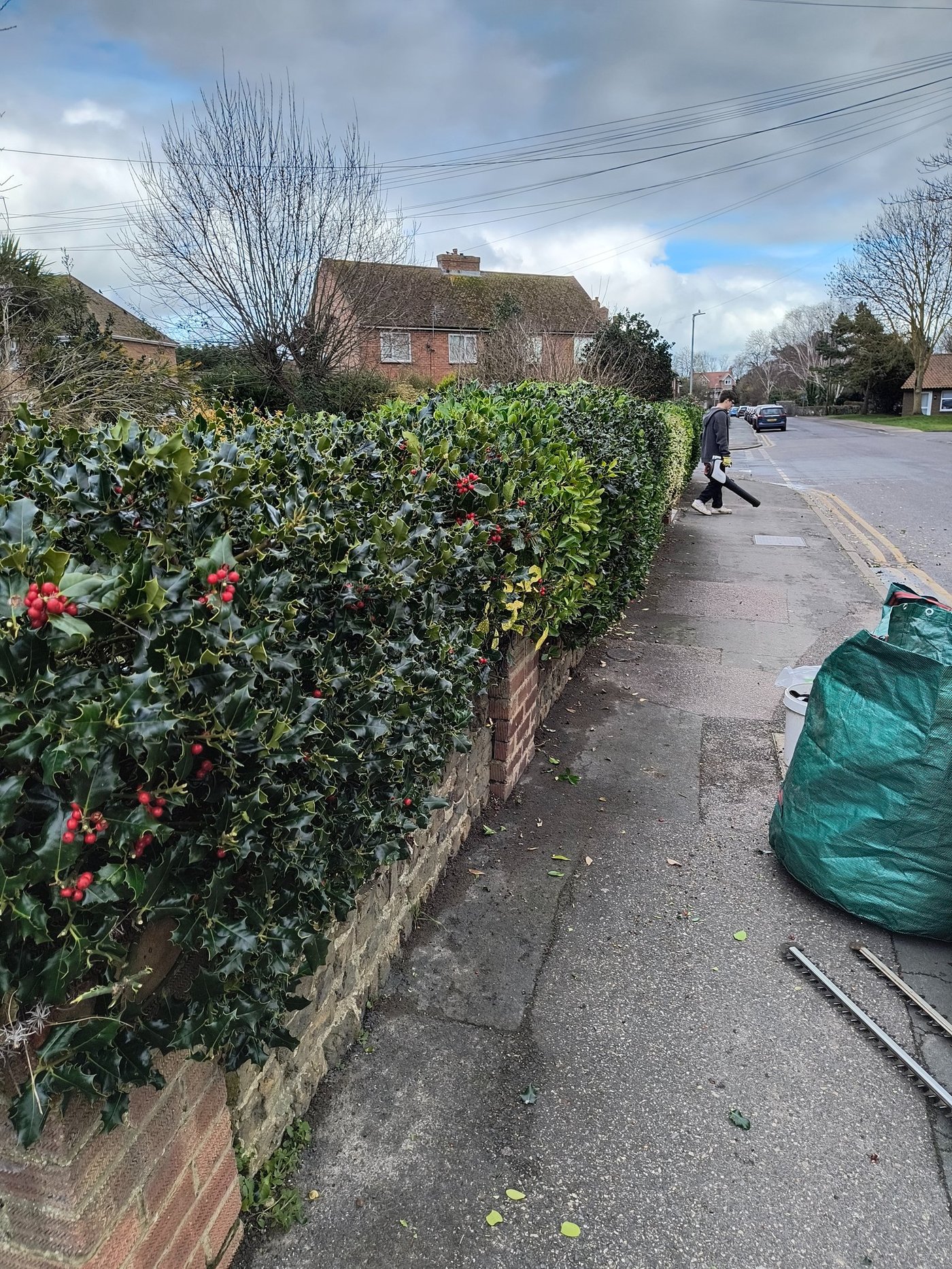
Hedge disputes are one of those things. Quiet for years, then one unlucky afternoon it's all anyone in two houses can think about. The law around it isn't as clear-cut as people hope, but the basics really are basic, so let's start there.
This isn't legal advice
We cut hedges for a living. This guide is general information based on what we've seen work (and not work) with customers over the years. If a dispute's actually going somewhere, get a solicitor.
The big rules in one place
- You can cut any part of a neighbour's hedge that crosses into your garden, up to the boundary line, branches, roots, everything on your side.
- You can't go onto their land to cut. Not without permission.
- Cuttings legally belong to the neighbour. You're meant to offer them back. Most people don't want them. That's fine, ask.
- You can't cut in a way that damages the health of the hedge overall (i.e. don't ring-bark it).
That covers most disputes. The interesting bit is what happens when the hedge is wholly on their side but blocking your light.
The High Hedges Act 2005
This is the law that deals with tall evergreen hedges between properties. The key points:
- Applies to hedges of two or more mostly-evergreen (or semi-evergreen) trees or shrubs, in a row, over two metres tall.
- Leylandii, cypress, laurel, classic candidates. A single tree doesn't count. A mostly-deciduous hedge doesn't count.
- The hedge has to be affecting the "reasonable enjoyment" of your property, usually light, sometimes overshadowing.
How a complaint actually works
The council will not get involved as a first step. They expect you to:
- Talk to your neighbour first. Politely. In writing is fine, an actual conversation is better.
- If that fails, put a formal request in writing, height you're asking them to reduce it to, why.
- Only then, complain to the council. There's a fee (usually £300–£600 depending on the district). The council will come, measure, assess light loss, and either require a cut or reject the complaint.
It's slow, it's awkward, and it costs money. Most High Hedges complaints that end well never went to the council, they were settled over a cup of tea.
Your own hedge, what's allowed
If it's your hedge, you can grow it to any height you like unless the neighbours can prove a light-loss case under the Act. In practice:
- Under 2m, you're fine, High Hedges Act doesn't apply.
- 2–3m, usually fine, but be reasonable if someone raises it.
- Over 3m, evergreen, north-facing the neighbour, you may have a problem. Worth a quiet conversation before it becomes a formal one.
When it's a shared hedge
Sometimes the hedge is right on the boundary line and was there before either of you moved in. In that case, both parties are responsible, and you need to agree before anyone cuts it. We've turned up to quote hedges before where it turned out we needed two signatures, and we came back a fortnight later when the neighbours had talked.
What we won't do
We won't cut a hedge if the ownership's disputed. We won't go over the boundary without the other party's permission. We won't take a neighbour's hedge down because you asked us to while they're on holiday. That's not how this works, and we like sleeping at night.
Ninety percent of hedge disputes are solved with a conversation before they start. The other ten percent are solved with patience and a council application.
Not sure where the boundary is?
Your title deeds will show it, even if not to the centimetre. If you want us to quote a hedge and there's a boundary question, just say, we'll have a look before we go near the blades.