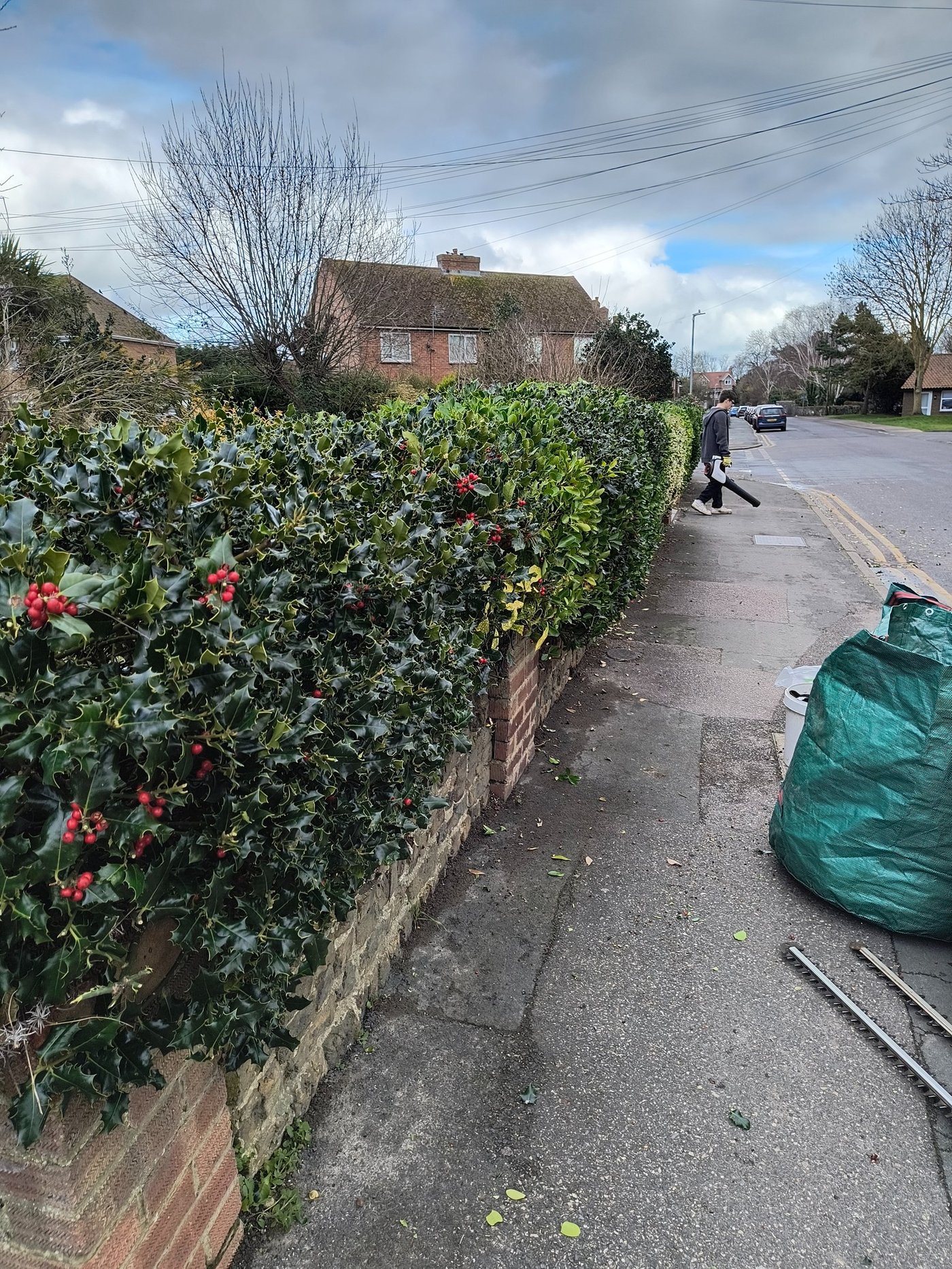
The first year after planting is all watering, mulching and hoping. Year two you start to see some shape. By year three, a hedge should really be telling you whether it is going to succeed or whether something is holding it back.
We get a lot of calls from people who planted a hedge three or four years ago and are wondering why it is not filling in the way they expected. Sometimes the answer is simple: they planted beech and expected privet speeds. Sometimes there is a real problem. This guide walks through what to look for, species by species, and what to do if yours is behind.
Pruning and nesting season
If you identify that your hedge needs a hard formative cut, the best time to do it is late August to October, outside nesting season (roughly 1 March to 31 August). Do not cut hard in spring even if the hedge looks dormant. If you are in any doubt about whether there are active nests, check before you start.
What three years looks like: species by species
Expectations vary enormously by species. The most common mistake is judging a slow species against a fast one.
Privet
By year three, a privet hedge on decent soil should be 1.2-1.5m or more, depending on what height you started at. It should be visibly dense from the outside. If yours is still see-through or has big gaps, it almost certainly did not get enough water in its first summer, did not get the formative cut in year one or two, or both. Privet responds well to a hard cut: take it down by a third in late August and it will push back hard.
Leylandii and other fast conifers
Leylandii should be the most advanced of any hedge by year three: easily 2m or more in many cases. If yours is lagging, check the base. Leylandii planted in chalk soil or on free-draining ground can struggle in dry summers. A waterlogged patch in a clay garden will also slow it dramatically. The other issue is planting too close: less than 60cm apart and the plants compete rather than establish. By year three, the formative trimming should have produced a broad, dense base tapering slightly towards the top.
Beech and hornbeam
Both are slower, and this is normal. A beech or hornbeam hedge planted as one-year whips (the cheapest and most common way) might only be 80cm-1.2m by year three in East Kent conditions. It will look loose and airy, particularly in summer, and thin at the base if the formative cut was missed. The tell for beech and hornbeam is the sides: if the outer branches are reaching out untrimmed rather than building a wall of fine twigs, the formative cuts have not been done or not been done hard enough. Cut the sides back firmly in August each year for the first four to five years to encourage the fine branching structure that gives beech its density.
Hawthorn and mixed native hedges
Hawthorn is typically used in mixed native hedges rather than as a formal hedge. After three years it should be showing strong thorny growth with visible structure. If it is being laid eventually, this is around the right time to assess whether the stems are strong enough. In East Kent gardens planted as a wildlife boundary, three-year-old native mixes often still look quite wild and open. This is usually fine: they fill and arch differently from formal hedges.
Laurel
Laurel is a reliable performer. By year three a cherry laurel or Portuguese laurel hedge should be well established, with broad glossy leaves and a visible screen effect. Laurel benefits from using secateurs rather than shears at the formative stage, to avoid the shredded-leaf look. If yours is trailing, the most common causes are deep shade from a fence or wall close behind it, and the first-summer drought issue: laurel needs water to establish and can stall on free-draining East Kent soils.
Yew
Yew is the slowest of the formal hedging species and needs the most patience. Three-year-old yew from small container plants is likely to be 50-80cm, still quite loose. This is normal. The formative cut on yew needs to be gentle: clip lightly on the sides from year two to encourage branching, but do not reduce the height until the plants have reached their desired height, which can be four to five years away. Yew planted in a Kent garden on chalk soil can actually establish faster than many people expect, as it is naturally suited to alkaline, free-draining ground.
Signs of healthy establishment
Regardless of species, a hedge that is establishing well will show these things by year three:
- Fresh green growth on all visible sides each spring and summer
- No obvious dead patches larger than a few centimetres
- New shoots coming from low down the plant, not just from the top
- A reasonably consistent density (no single plant that looks markedly worse than its neighbours)
- Root establishment: try to wiggle a stem gently. A well-rooted plant barely moves.
Signs that your hedge needs help
These are the things to look for when you suspect yours is not on track:
- A row of plants where one or two are clearly smaller or paler than the rest. Check the soil in that spot: there may be a drainage problem, compaction from machinery, or a buried rubble layer common in new-build gardens around Sandwich and Deal.
- Thin at the base, bushy at the top. This is almost always a formative pruning issue. The top-heavy growth is shading out the base. Fix: reduce the top width significantly and let light in from above.
- Yellowing foliage in summer. On chalk soil this can be iron or magnesium deficiency. A feed with a balanced slow-release fertiliser in April should help. If the yellowing persists, consider a specific ericaceous feed for affected species.
- Sparse growth on one side. Usually the shadier side of the hedge, facing a fence or building. Some thinning on the shaded side is normal and unavoidable; severe spareness may mean the plants are getting no sun at all on that face, which some species tolerate better than others.
What to do if your hedge is behind schedule
Watering
A hedge you planted three years ago but never watered through the dry summers may simply be under-established. This coming spring and summer, water thoroughly once a fortnight during dry spells. Focus on the base of the plants, not the foliage. A good soaking to depth is worth more than daily sprinkles on the surface. The coastal area around Sandwich and Deal gets less summer rainfall than most people assume, and new hedges on free-draining soil are genuinely vulnerable.
Mulching
A 10cm layer of well-rotted compost or bark chippings along the base of the hedge retains moisture, suppresses weeds and feeds the soil. It is one of the highest-return actions you can take on a slow-establishing hedge. Keep the mulch away from the stems themselves to avoid rot at the base.
Feeding
A slow-release general fertiliser (fish, blood and bone, or a proprietary hedge feed) applied in early April will give an underperforming hedge a meaningful boost. Do not over-apply: on privet and leylandii especially, excess nitrogen produces lots of soft growth that can be more pest-prone and less winter-hardy.
The formative cut question
By year three, the question of formative cuts should have been answered already. But if they were not done, it is not too late. A hard cut in late August or September, taking the sides back by a quarter to a third and the top back if it has grown above the intended height, will stimulate dense low branching. Do this now rather than waiting another year.
Filling gaps
If individual plants have died, the bare-root planting season runs from November through to March. Order replacement plants in the same species and size as the original planting. New plants placed in an established run will need consistent watering in their first summer to have any chance of catching up.
A practical illustration: three years on
Garden designer and BBC Garden Rescue presenter Lee Burkhill (Garden Ninja) has documented his own hedge planting project from initial installation through to a three-year progress review. Watching what changed and what did not between planting and year three, and how the interventions he made along the way shaped the result, is a useful reference point for assessing your own hedge.
Garden Ninja (Lee Burkhill, BBC Garden Rescue): youtube.com/@GardenNinja
Not sure what your hedge needs?
We assess and maintain hedges across Sandwich, Deal, Worth, Ash, Woodnesborough, Eastry and Sandwich Bay. If your three-year-old hedge is not where it should be, we can usually tell you why from a visit. Get in touch for a free assessment quote.
Related guides
Formative hedge pruning in years 1, 2 and 3
Why the cuts you make in the first three years determine whether a hedge ever fills in properly, and how to do them for the main hedging species.
Read the guide PlantingCommon mistakes when establishing a new hedge
Seven avoidable reasons new hedges fail in their first two years in East Kent: planting timing, watering, mulching, formative pruning, depth, staking and species choice.
Read the guide