We get calls every winter from gardens near Sandwich Bay, Deal seafront and the open ground around Worth: a hedge that looked fine in summer, then went brown and crispy on one side after a run of winter storms. Nine times out of ten, that's salt scorch, not disease, not cold, and it's almost always because the wrong species went in the ground.
Salt damage looks like cold damage, and it isn't
Browning that's worst on the side facing the sea, appears after windy weather rather than a hard frost, and hits the newest growth first is salt scorch. True frost damage tends to be more even across the whole plant. Misdiagnosing it as "the cold got it" and doing nothing is the single most common mistake we see on coastal jobs.
Checklist: choosing a hedge for an exposed coastal garden
1. How exposed is the plot, actually?
Direct sea view with nothing breaking the wind (much of Sandwich Bay) is the harshest setting in East Kent. A garden a street or two back, with buildings or other hedges taking the worst of it, has more room to work with. Be honest about this before picking a species, it changes the shortlist.
2. Pick from the genuinely salt-tolerant species
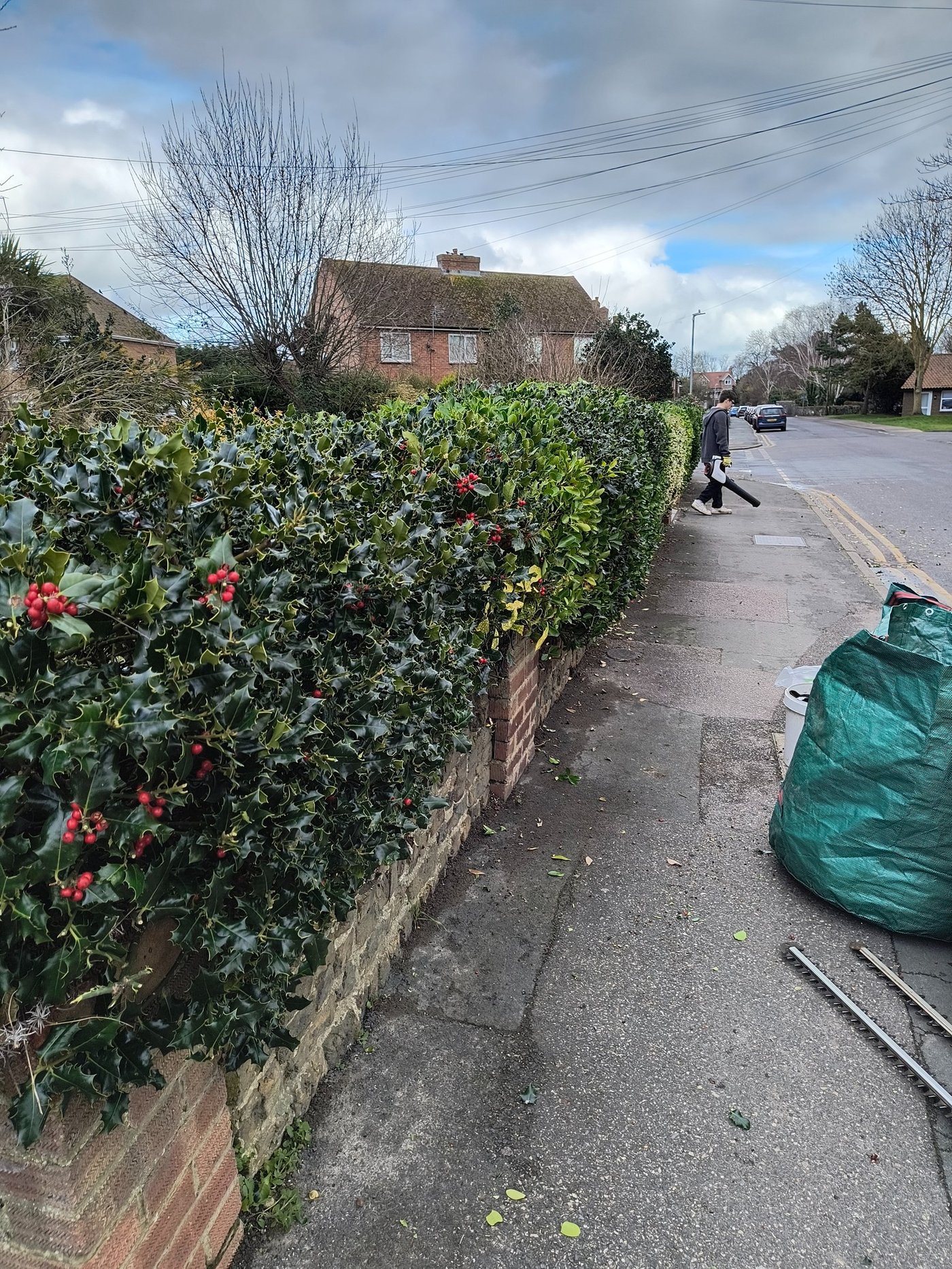
Escallonia, tamarisk, olearia (daisy bush), griselinia and hawthorn all cope well with direct salt spray and are already used successfully in exposed East Kent gardens. Privet and holly do reasonably well a little further back from the sea. Leylandii, laurel and beech, all popular choices inland, tend to scorch badly on a genuinely exposed frontage, we'd steer you away from them on a first-line plot.
3. Plant a nurse hedge if the site is very exposed
On the harshest plots, a fast-growing, disposable windbreak (temporary netting, or a row of tamarisk you're happy to thin out later) planted in front of your real hedge for the first two to three years takes the worst of the wind while the permanent hedge establishes. It's an extra step, but it noticeably improves survival rates on a direct sea-facing plot.
4. Water in the first two summers, even by the coast
Coastal ground drains fast and salt in the soil can actually pull moisture away from roots, so a new coastal hedge often needs more watering in its first two summers, not less, despite the sea air feeling damp. Once established, most of the species above need very little.
5. Time any renovation cutting around the wind, not just the calendar
The usual September to February cutting window and nesting-season rules still apply in full. On top of that, avoid hard renovation cuts right before a forecast run of strong onshore winds, freshly cut edges are more vulnerable to salt scorch than established growth.
Already got a scorched hedge?
We deal with salt-damaged hedges around Sandwich Bay, Deal and Worth every winter. Send us a photo and we'll tell you honestly whether it needs replacing or will recover on its own.