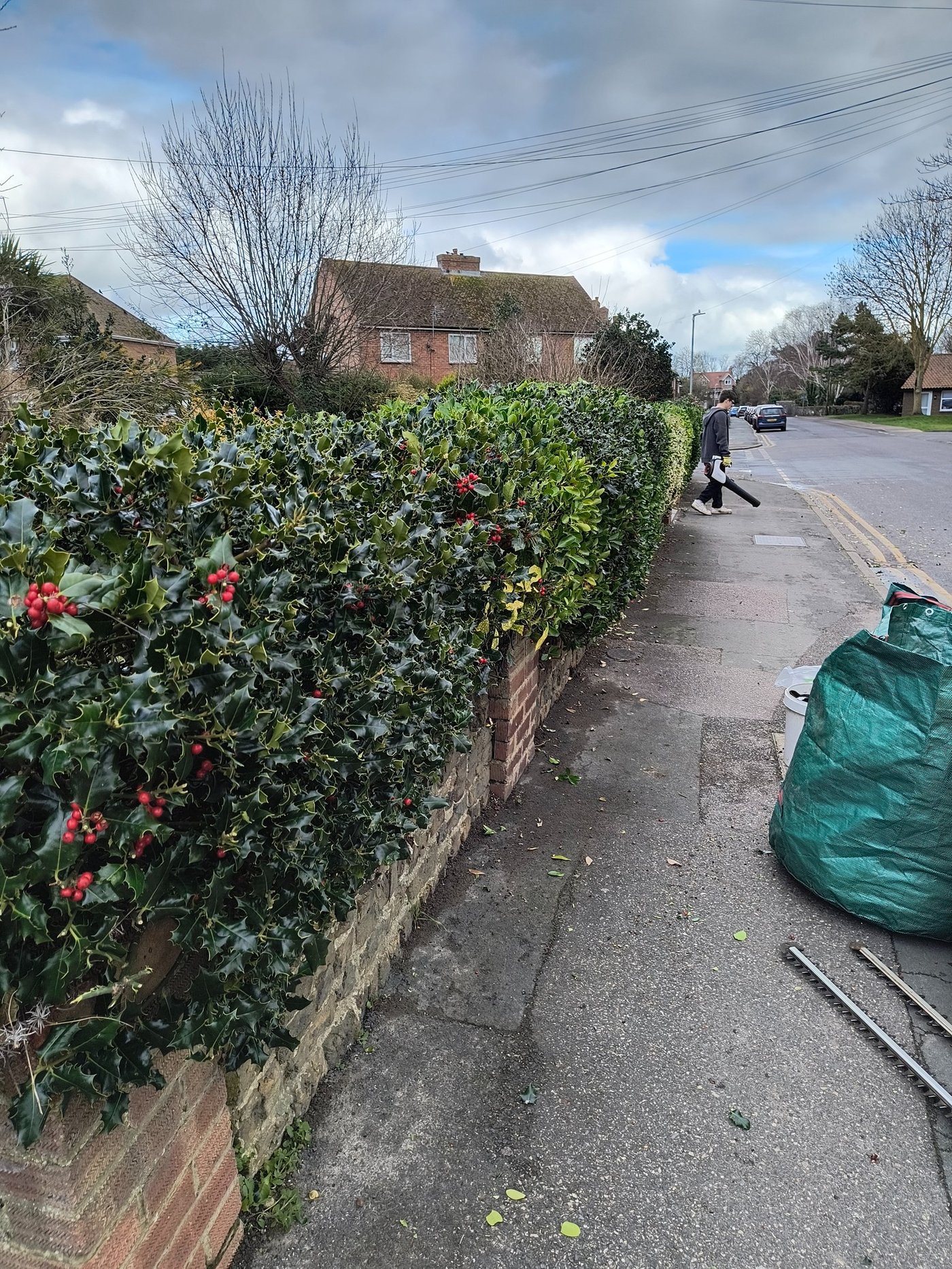
Spring hedge planting: eight-point checklist
- Wait until soil temperature is above 7°C (roughly late March onwards in most of Kent)
- Use pot-grown, not bare-root stock (bare-root season ends around March)
- Clear a 90cm-wide strip of grass and weeds along the planting line
- Dig in compost or topsoil, especially on chalk or dry sandy ground
- Plant at the correct spacing for your chosen species (see below)
- Water in thoroughly at planting and keep consistently moist for the first six to eight weeks
- Mulch the full strip to 75mm depth to retain moisture and suppress weeds
- Plan a watering routine through the first summer, particularly July and August
Autumn planting gets most of the attention, and there are good reasons for that: bare-root stock is cheaper, the soil is warm and moist, and hedges have a full winter to settle their roots before the dry season arrives. But plenty of people want to plant a hedge in March, April or May, whether they missed the autumn window or simply decided over winter. Spring planting is entirely viable; it just requires more attention to watering.
The RHS YouTube channel (over 104,000 subscribers) covers hedge planting in detail, including the differences between bare-root and container-grown stock and how to give new plants the best start. The guide below reflects the same principles, adapted for the conditions we see in East Kent.
The key difference: pot-grown not bare-root
Bare-root hedging plants are lifted from nursery fields while dormant, with their roots exposed to air. They must go in during dormancy, roughly November to early March. After March, the root system is actively growing and bare-root plants transplant poorly.
From March onwards you use pot-grown or root-ball plants instead. These come with their root system intact in compost and can be planted while actively growing. They cost more per plant than bare-root, but the range available from UK garden centres and online hedging nurseries in spring is good, and the survival rate from a properly watered spring planting is comparable to autumn bare-root.
Checklist item by item
1. Soil temperature
In a cold spring, planting in waterlogged or frozen-feeling soil sets the plants back further than waiting. A soil thermometer is inexpensive and worth using. In most of East Kent, the ground reaches a usable temperature by late March, earlier in sheltered south-facing gardens around Sandwich Bay or the Deal coast.
2. Pot-grown stock
Order from a UK specialist hedging nursery or a well-stocked garden centre. Avoid anything that has been sitting in a tiny pot for months; roots circling the pot base indicate the plant has been there too long. Gently loosen compacted roots before planting.
3. Clear the planting strip
Remove all grass and weeds from a minimum 90cm-wide strip along the planting line. In spring, actively growing grass and weeds compete hard with new hedging plants. A sharp spade or a hoe, rather than chemicals, keeps it clean. Take care of any existing vegetation and check the area carefully before disturbing it (see nesting note below).
4. Soil preparation
East Kent has a wide range of soils. Chalk and light loam around Sandwich, Woodnesborough and Eastry drain quickly and benefit from generous additions of compost and a mulch to hold moisture. Clay soils toward Deal and Worth hold water better but may need grit worked in to prevent compaction around new roots.
5. Spacing
For a dense formal hedge, plant at 2 to 3 plants per metre for privet, laurel and beech. Leylandii at 60 to 90cm centres for a screen. Escallonia and griselinia at 50 to 60cm. See our full hedge planting spacing guide for species-specific distances.
6. Water in thoroughly
At planting, saturate the root zone. Do not just wet the surface. The most common reason spring-planted hedges fail is root dry-out in the weeks after planting while the hedge looks fine above ground. Water every two to three days for the first six to eight weeks unless there has been significant rain.
7. Mulch
A 75mm layer of bark mulch along the full planting strip makes a material difference. It retains soil moisture, reduces weed competition and moderates soil temperature. Keep mulch slightly away from the base of the stems to prevent rot. This single step reduces watering frequency significantly.
8. Summer watering plan
East Kent summers can be dry. A hedge planted in April needs watering through its first July and August. Set a reminder, plan how you will water (hose, watering can, seep hose), and tell anyone who might be looking after the garden during holidays. The investment in watering the first summer pays dividends for decades.
Which species establish best in spring?
Privet is the most forgiving of the common Kent hedge species, establishing quickly from pot-grown stock planted in spring. It tolerates poor soil and handles dry spells better than most once established.
Laurel (cherry laurel and Portuguese laurel) establishes well from pot-grown stock in spring. Its large leaves lose a lot of water, so watering is more critical in the first few weeks than with smaller-leaved species.
Griselinia establishes readily in spring, is salt-tolerant (useful for gardens near Sandwich Bay or the Deal seafront) and is a popular choice on the coast for that reason.
Escallonia and hebe are also well suited to pot-grown spring planting and are happy on the chalk and light soils found around Sandwich and Woodnesborough.
Beech and hornbeam are traditionally autumn-planted as bare-root stock, but container-grown beech and hornbeam planted in April establish well with consistent watering. Avoid planting in May once warm weather has arrived; they dry out more easily than evergreens.
Leylandii planted in spring from pots establishes quickly, sometimes more rapidly than autumn-planted stock because it immediately hits active growing conditions. Plant at the right spacing (60 to 90cm) and do not be tempted to plant closer to get faster coverage; overcrowded leylandii hedges cause more problems than they solve.
Nesting season: critical for spring planting
Spring planting falls entirely within nesting season, which runs from 1 March to 31 August under the Wildlife and Countryside Act 1981. Before disturbing any existing hedgerow, scrub or dense vegetation to prepare your planting strip, check carefully for active nests. If you find a nest with eggs or young, work around that section and return once the birds have fledged. Planting a new hedge is not affected, but clearing the site around an existing hedge or hedgerow requires care. See our wildlife-friendly trimming guide for the full detail.
Want us to plant it for you?
We plant hedges as well as cut them. Get in touch with what you have in mind and we will advise on species, spacing and timescale for your garden in Sandwich, Deal, Worth, Ash, Woodnesborough, Eastry or Sandwich Bay.
Related guides
Autumn hedge planting in Kent
Planning and preparation guide for bare-root autumn planting, September to November: species for chalk, clay and coastal soils.
Read the guide PlantingNewly planted hedge care
What to do in the first two years after planting: watering, formative pruning, feeding and dealing with establishment problems.
Read the guide