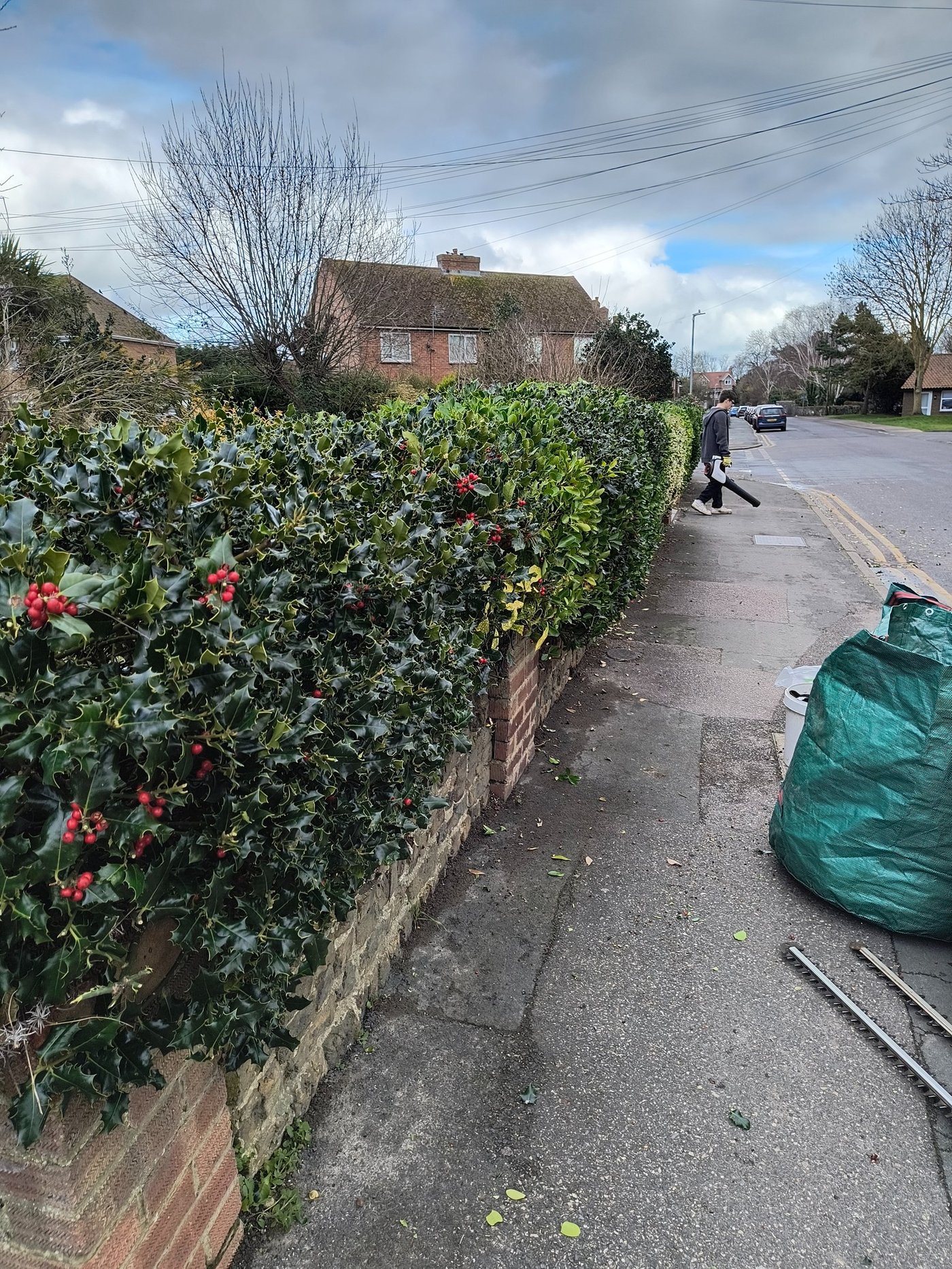
The nesting season is over: cutting is safe
The UK Wildlife and Countryside Act 1981 makes it an offence to damage an active bird's nest. Nesting season runs roughly 1 March to 31 August. From September onwards you are in the clear for all normal hedge maintenance. If you deferred any cuts because of nesting concerns, now is the time to do them.
Before you start: safety basics
Before you start cutting
- PPE: eye protection against flying debris, ear defenders if using a petrol or electric trimmer, sturdy gloves throughout.
- Ladder safety: the majority of garden accidents involve ladders. Where hedge height allows, use a pole or long-reach trimmer instead. If a ladder is needed, always have a second person footing it and never overreach sideways.
- Electric trimmer cable: always use an RCD/circuit-breaker with any corded electric trimmer. Keep the cable behind you and away from the cutting path at all times.
- Wasp nests: autumn is when wasps are most active and defensive. Check the hedge from underneath before starting and stop immediately if you disturb a nest.
Step 1: the final autumn cut (September to November)
For most hedges, the best final cut of the year falls between late September and the end of October. This is the main cutting window for East Kent gardens, and late August or September gives the hedge one last chance to harden off the new surface before the first frosts.
Different species have different deadlines:
- Privet, laurel, photinia: cut freely until end of October. Fast re-growth is not a problem as there is still time to harden off.
- Beech and hornbeam: cut any time from late July to November. Beech cut in August or early September keeps its coppery dead leaves through winter, which is worth the wait for deciduous hedges.
- Yew: late August to October is ideal. Yew recovers well and handles late cuts better than most.
- Box: the latest safe cut for box is late September. Avoid cutting box in October as wounds may not heal before cold, wet conditions arrive, increasing blight risk.
- Leylandii and conifers: aim to finish by mid-October. Conifer cut edges do not callous over in cold conditions and brown patches may develop if cut late. See our conifer trimming guide for more detail.
- Deciduous hedges (hawthorn, blackthorn, field maple, hazel): any time after leaf-fall is fine, typically November onwards. There is no rush.
For the full month-by-month timing guide, see when to trim hedges in Kent.
Step 2: stop feeding
If you have been applying fertiliser through the summer, stop by the end of August. Nitrogen-rich feeds in autumn promote soft new growth that is easily damaged by frost. The hedge needs to harden up and direct energy into root reserves, not into producing more green shoots that will not survive the winter.
Slow-release fertilisers applied in spring or early summer may still be actively releasing nutrients into October. That is fine. But do not apply any more feed, particularly granular or liquid nitrogen products, once September is underway.
Step 3: mulch the root zone
October and November are the best time to mulch along the base of your hedge. The soil is still warm from the growing season, the mulch will insulate roots through the colder months ahead, and it suppresses the weeds that would otherwise get established through winter.
Apply 5 to 8 centimetres of bark chip or well-rotted compost across a 30 to 60 centimetre strip on each side, keeping the material a few centimetres clear of the stems. For a detailed guide to mulch materials and application, see our hedge mulching guide.
Step 4: identify frost-tender species
East Kent's coastal climate is relatively mild. Winter temperatures at Sandwich and Deal rarely drop below -5°C for sustained periods, and the sea's thermal mass moderates hard frosts significantly. This means most hedge species are fine without any protection.
However, a few commonly planted species are borderline hardy in the UK and benefit from some attention in a cold winter:
Griselinia littoralis
Rated to around -5°C. Established coastal plantings at Sandwich Bay handle most winters without issue. In exposed inland locations around Ash, Woodnesborough and Eastry, a very cold snap can cause significant leaf browning and tip die-back. For newly planted griselinia (less than three years old) in any location, a layer of horticultural fleece tied loosely around the top of the hedge provides meaningful protection during hard frosts. See our griselinia care guide for full details.
Pittosporum tenuifolium
Hardier than sometimes thought in sheltered gardens but vulnerable to combination of wind and frost. In exposed coastal gardens at Sandwich Bay or along the Deal seafront, wrap young plants loosely in fleece during prolonged cold spells. Established pittosporum hedges of five or more years generally recover even after some leaf loss.
Choisya (Mexican orange blossom)
Choisya ternata is reasonably hardy to about -10°C in a sheltered spot but the foliage scorches badly in cold drying winds combined with frost. The new growth after the summer flush is the most vulnerable. A windbreak or fleece screen on the exposed face during the coldest months prevents most damage. See our choisya care guide for more.
Bay laurel (Laurus nobilis)
Bay can suffer serious tip and leaf scorch in hard winters. The foliage turns bronze-black in severe frosts and in a very bad year the plant may die back to the root. In most Kent winters it recovers fully. For shaped bay trees or topiary in containers, move them into a frost-free space if you have one. For in-ground bay hedges, fleece is helpful in forecasted hard frosts.
Phormium (New Zealand flax)
Phormium tenax is hardy to around -12°C; more ornamental cultivars vary. The leaves may brown at the tips in hard winters but the plant recovers. Protect young phormium plants in their first winter with a mulch of dry straw around the crown.
Step 5: check for disease or stress before winter closes in
Autumn is the last realistic window to do something about a problem before it goes untreated all winter. Walk the hedge line and look for:
- Brown patches on conifers: if sections of leylandii or thuja have gone brown, identify whether this is drought stress, disease or physical damage. Brown conifer patches do not recover: see our guide to conifer browning.
- Box blight: bare patches with grey-white fungal threads on remaining leaves. Treat with a copper-based fungicide in mild weather before the hedge goes into winter. See our box blight treatment guide.
- Honey fungus signs: dark bootlace-like rhizomorphs in the soil at the root zone, a mushroom smell after heavy rain, or sections of hedge that are collapsing despite looking healthy above ground. There is no cure for honey fungus, but identifying it now allows you to plan removal before it spreads to adjacent healthy plants. See our honey fungus guide for more detail.
STIHL on winter hedge preparation
STIHL's YouTube channel covers hedge winter preparation in a short practical video, "How to prepare hedges for winter | STIHL" (published December 2023, video ID: VMvKi59EkKc). STIHL is one of the world's leading manufacturers of garden power tools and has a dedicated UK channel (STIHL GB). The video covers late-season pruning principles and pre-winter tidying, applicable to UK conditions.
We do this across East Kent every autumn
Final autumn cuts, mulching and checking for disease: we cover Sandwich, Deal, Worth, Ash, Woodnesborough, Eastry and Sandwich Bay. Send a photo for a free quote and we will let you know when we can fit you in.
Related guides
Autumn hedge care
Final trim timing by hedge type, how deep to go in autumn and what to do with the clippings.
Read the guide TimingWinter hedge care: January and February
What to cut, what to leave and why the dormant season is the best time for hard renovation on most deciduous species.
Read the guide