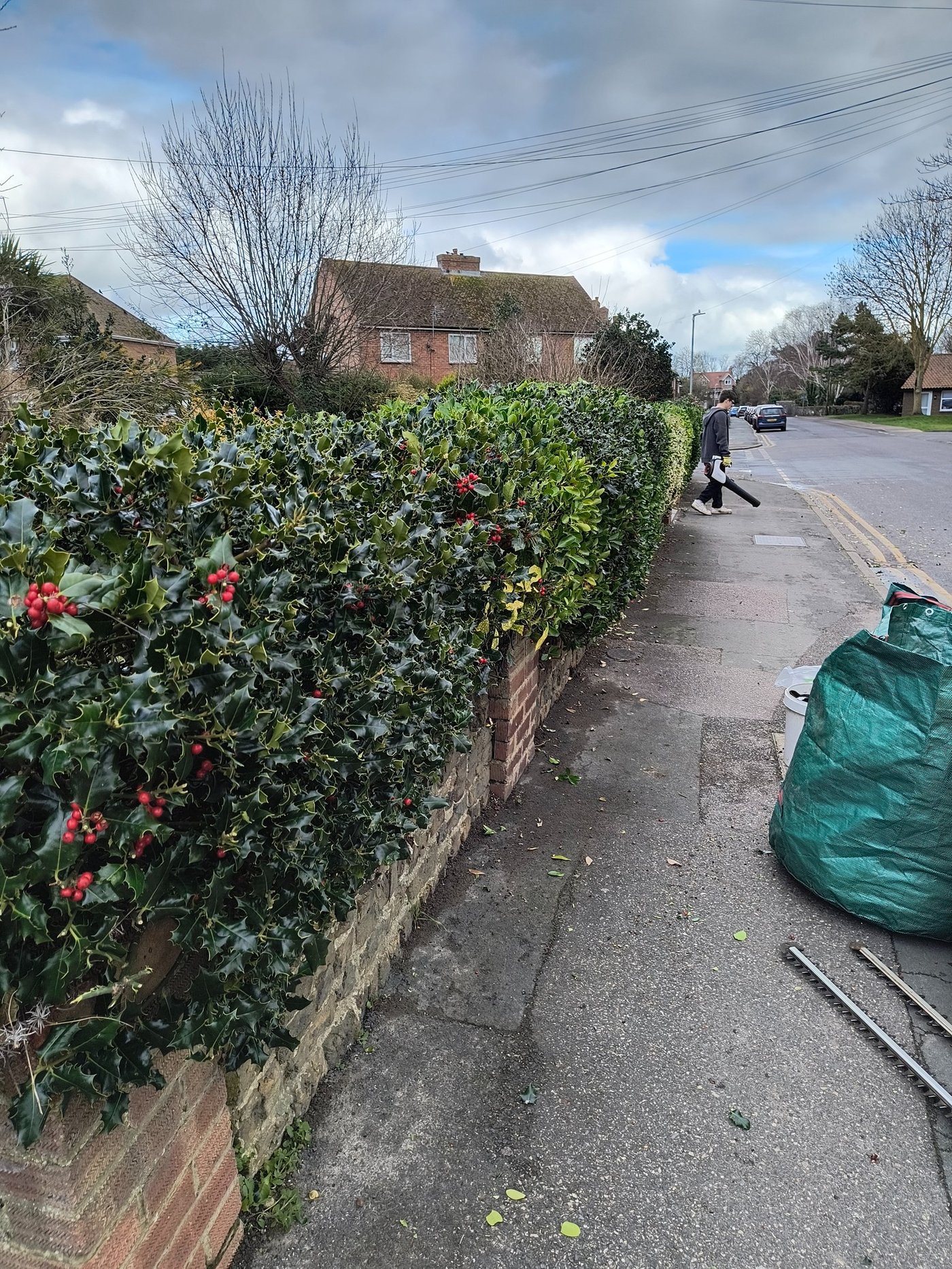
Battery hedge trimmers have improved sharply over the past five years. For a domestic East Kent garden, a decent 36V or 40V cordless machine will handle most hedges without you ever missing the petrol engine. That is a sentence we would not have written in 2020. But petrol still has a legitimate role, and buying the wrong type wastes money either way.
Below is a straight comparison, followed by the practical answer for the most common garden scenarios we see around Sandwich, Deal, Worth, Ash, Woodnesborough, Eastry and Sandwich Bay.
Before you start: safety applies to both types
Hedge trimmer blades move at high speed and stop for nothing. Regardless of whether you are using battery or petrol:
- Eye protection is essential. Flying debris is the main hazard with any hedge trimmer.
- Ear defenders are required for both, though petrol is louder. Prolonged exposure to either damages hearing.
- Gloves protect hands from cuts and vibration.
- Ladder use: prefer a long-reach or pole trimmer over a ladder wherever height allows. If a ladder is unavoidable, always have someone footing it and never overreach sideways.
- Check for wasp nests and brambles before you start. Both are a hazard you want to find before the trimmer does.
- For corded electric models: use an RCD adaptor at the socket. It will not save you if you cut through a cable at speed, but it reduces the risk significantly.
Side-by-side comparison
| Feature | Battery (36V–40V) | Petrol |
|---|---|---|
| Cutting power | Strong enough for most domestic hedges up to ~20mm stem | Greater sustained power for thick leylandii and all-day use |
| Weight | Lighter (typically 3–4 kg including battery) | Heavier (typically 5–6 kg) |
| Noise | Quieter (~85–92 dB) | Loud (~99–106 dB) |
| Runtime | 20–40 min per charge (more with second battery) | Continuous while fuel lasts |
| Fumes | None | Exhaust fumes during use |
| Maintenance | Minimal (clean blade, charge battery) | Engine servicing, fuel mixing or storing (two-stroke models) |
| Purchase cost | Mid-range battery trimmer: £80–£200 | Entry petrol: £150–£400+ |
| Running cost | Low (electricity) | Fuel and annual service |
When battery wins
For most domestic East Kent gardens, battery is the right choice. Here is why.
The typical garden around Sandwich, Deal or Woodnesborough has 20 to 60 metres of hedge at most: a run of privet along the front, laurel or beech at the back, maybe a box edging or a yew ball by the gate. A single charge on a quality 36V battery machine handles all of that with time to spare. Plug in while you rake up the clippings and you are fully charged before the next section needs doing.
Noise is a significant factor in these villages. Petrol trimmers at 100 dB or more carry a long way on a quiet autumn morning and tend to attract comments from neighbours. Battery trimmers are no whisper, but the difference is substantial. In Sandwich Bay, where houses are close together, that matters.
Battery machines are also lighter, easier to start (press a button rather than pulling a cord), and require almost no maintenance. For someone cutting their own hedges two or three times a year, that convenience is worth more than raw power.
When petrol wins
If you have a large run of thick hedging, leylandii that has been left to grow wide, or mature laurel with woody stems, petrol has a clear advantage in sustained cutting power. A two-stroke engine at full throttle cuts through material a battery machine will bog down on.
Petrol also wins for all-day professional use. We run petrol machines on full commercial days: a battery system that runs continuously for six to eight hours without interruption is expensive and heavy. The economics flip for that kind of use.
If your hedges are large, dense and overgrown, consider our overgrown hedge rescue service rather than tackling it with an underpowered tool. Forcing a battery trimmer through material it cannot cut cleanly just shreds the stems.
What about corded electric?
Corded electric trimmers are lighter and cheaper than either, and they never run out of power mid-cut. The cable is the drawback: it limits range, creates a trip hazard and requires an RCD adaptor as a minimum safety measure. For a small, accessible front garden with a socket nearby, a corded model is a perfectly sensible choice. For anything larger or further from the house, battery removes the frustration.
The practical answer for Kent domestic gardens
Buy a 36V or 40V battery trimmer with at least one spare battery if you have up to about 60 metres of hedge. Brands with spare batteries available in UK garden centres (so you can replace rather than scrap the machine when the battery dies) are worth paying a little more for. Look for a blade gap of at least 19mm for laurel and privet; 22mm if your hedge has any woody material.
If you have thick leylandii or the hedge has not been cut in several years, call us. A machine that's too light for the job creates more work, not less.
UK garden presenter David Domoney (Chartered Horticulturist, ITV's Love Your Garden, over 376,000 YouTube subscribers) covers the practical differences between garden power tools in his YouTube videos, offering accessible guidance for home gardeners on choosing the right equipment for their conditions.
Nesting season reminder
The Wildlife and Countryside Act 1981 makes it an offence to damage or destroy an active bird's nest. Nesting season runs from 1 March to 31 August. Whatever trimmer type you use, the cutting window for most hedges is September to February. A light summer trim is only permitted if the hedge has been checked and is demonstrably empty. See our full trimming calendar for species-by-species timing.
Not sure which tool is right for your hedge?
We're out cutting hedges across Sandwich, Deal, Worth, Ash, Woodnesborough, Eastry and Sandwich Bay. Send a photo for a free quote, and we can tell you whether the job suits DIY or professional kit.
Related guides
Choosing a hedge trimmer: cordless, corded or petrol?
A broader look at all three trimmer types, with guidance on blade length, tooth gap and what to look for in each category.
Read the guide Safety · DIYHedge trimming safety checklist
PPE, ladder safety, cable management and what to check before and after every cutting session.
Read the guide