Composting, the free option
Hedge trimmings are what's called brown material in composting terms, mostly carbon-rich woody waste. On its own it breaks down slowly, so it needs mixing with something nitrogen-rich, grass clippings, vegetable peelings, that kind of thing, or it just sits there for a year.
Snip smaller, leafier trimmings up before adding them, whole branches take much longer to rot down and can make the pile harder to turn.
Shredding, worth it for a big job
For anything more than a bin bag or two, a garden shredder turns a pile of awkward branches into a manageable heap of chippings in a few minutes. Shredded material composts faster and can also be used directly as mulch around borders and beneath the hedge itself.
If you don't own a shredder, some Kent councils run seasonal shredding events or hire days, worth checking before buying one for an occasional job.
Council green waste collection
Most Kent councils run a garden waste collection service, usually a brown bin on a fortnightly or monthly cycle, sometimes a chargeable subscription. It's the easiest option for a one-off big cut with no composting space, check your specific council's scheme and any size limits on branch thickness before putting trimmings out.
The dead hedge option
If there's a corner of the garden nobody minds looking a bit wild, woody offcuts can be woven or stacked between a couple of stakes to build what's called a dead hedge, a simple wildlife feature that gives hedgehogs, insects and birds somewhere to shelter. It slowly rots down over a few years, no bin, no shredder, no trip to the tip.
We take the trimmings away too
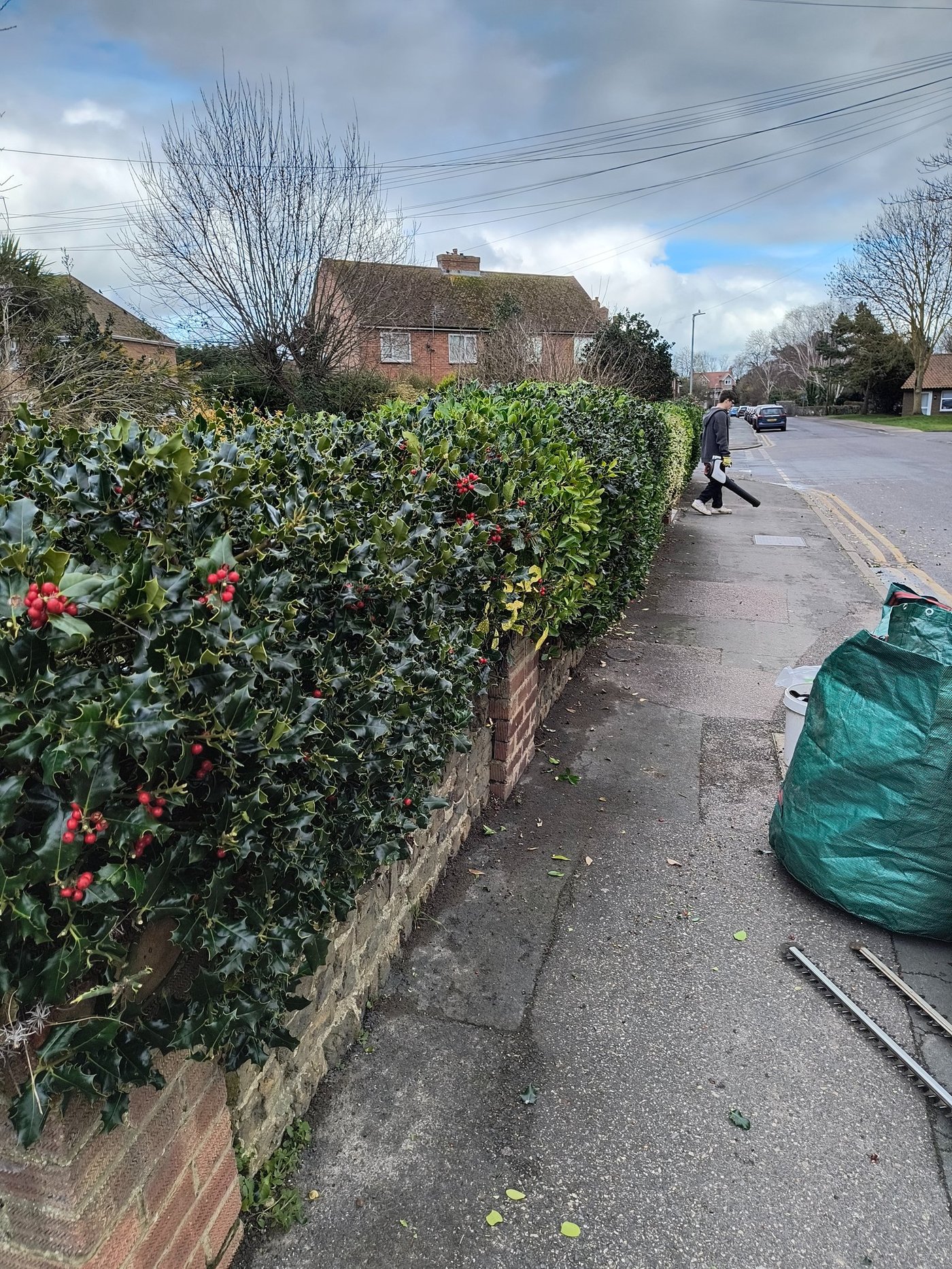
Every hedge job includes clearing up and taking the cuttings with us, no need to sort it out yourself. Across Sandwich, Deal, Worth, Ash, Woodnesborough, Eastry and Sandwich Bay.
Related guides
Renovating a neglected hedge
Inherited a garden with a hedge that's had a few years off? Here's how to bring it back without killing it.
Read the guide DIYHow to trim a hedge straight
A working hedge cutter's step-by-step for a clean finish at home, kit list, string-line trick, and the common mistakes.
Read the guide